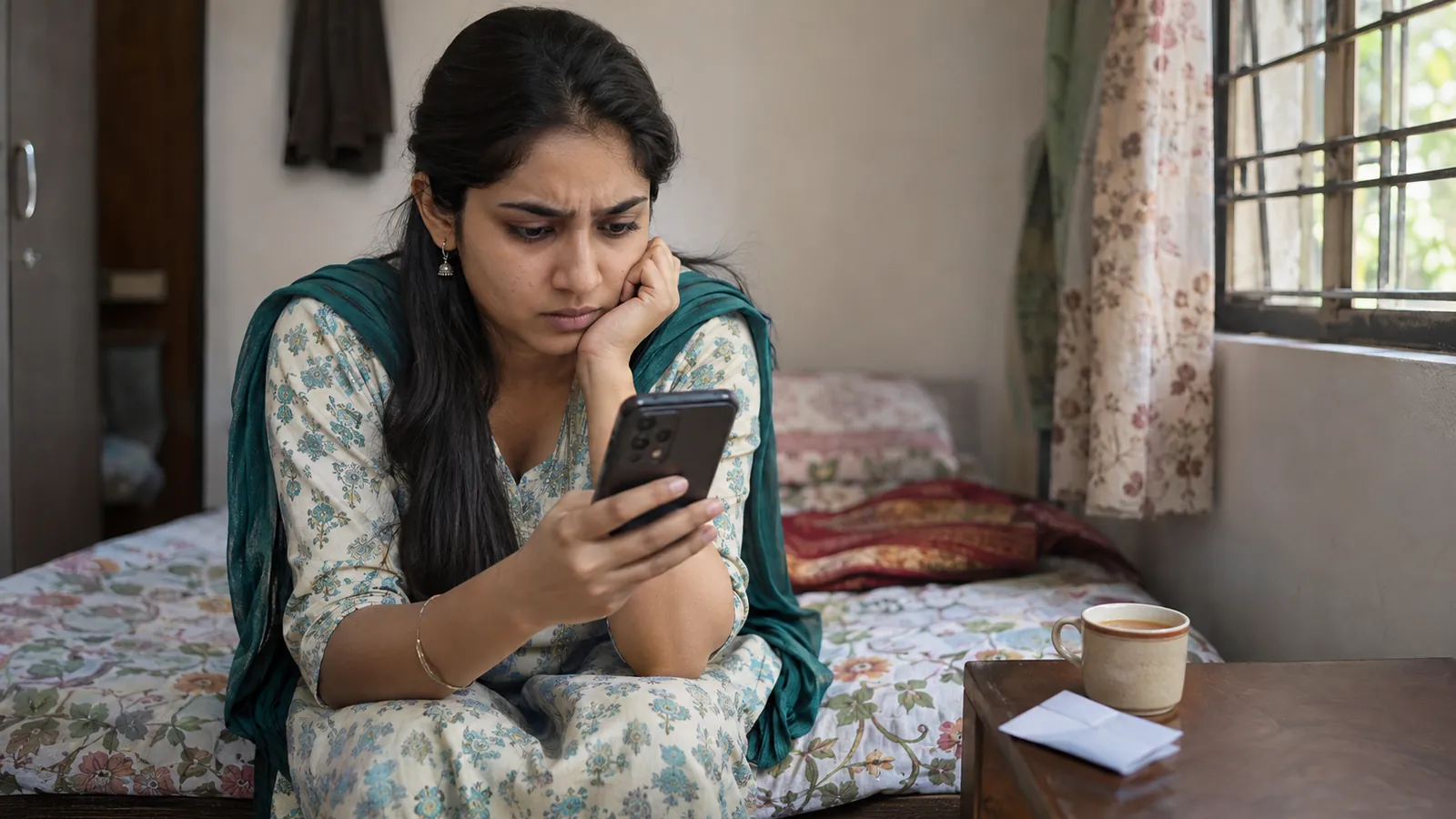
Before borrowing through an app, check the lender, written terms and permissions requested. CERT-In warns that loan scammers pose as legitimate lenders, offer attractive terms and may ask for a fee upfront, then disappear with it. Pause before sharing identity documents or paying anything. This guide is practical information, not legal advice.
Already being blackmailed? Do not pay more to stop threats or image-sharing. Government cyber-safety guidance advises preserving evidence, stopping engagement and reporting. Keep genuine loan repayment separate: ask the verified lender for your account statement rather than accepting a caller's demand.
Find the lender behind the app
Look for the bank or non-banking financial company (NBFC) actually providing your loan. RBI's public warning says apps acting for banks and NBFCs must disclose their names upfront. Write down the lender's full legal name before entering your PAN, Aadhaar or bank details.
Open RBI's public DLA directory. The Ministry of Finance confirms it became operational on 1 July 2025. Match the app with its claimed regulated entity, then contact that lender independently if anything differs. Do not rely on an agent's screenshot.
The directory is an association check, not an RBI guarantee. RBI's digital lending rules say RBI does not verify the data lenders submit and listing must not be presented as RBI registration, authorisation or endorsement. Treat “RBI-approved app” advertising cautiously.
For an NBFC, also check RBI's registered NBFC list and cancelled registrations. Compare the exact company name. Then visit the lender's own website and ask it to confirm the app and offer. Stop if you cannot establish who is lending.
Do not end your checks at the app store. Google's India policy requires personal-loan apps submitted for review to be on RBI's DLA list. Still compare the developer, lender and download link yourself. Ask the lender to resolve any mismatch before proceeding.
Read the paperwork before accepting
The rules in this section come from RBI's digital lending rules for NBFCs, now part of its consolidated Credit Facilities and Responsible Business Conduct directions. The Key Facts Statement itself is required for retail loans from all RBI-regulated lenders, banks included, under RBI's KFS circular.
Ask for the Key Facts Statement (KFS) before agreeing. It should be in a language you understand, with its contents explained. RBI's NBFC rules require an APR calculation and repayment schedule. No KFS, or “we will send it after you accept”, is a reason to stop.
APR is the annual cost of credit, including interest and other associated charges, under RBI's definition. Compare it alongside the amount reaching your account, instalments and repayment dates. Ask for every deduction to be explained. Use our EMI guide when checking affordability.
Before accepting, work through these questions yourself. Ask the lender to answer anything unclear in writing:
- What will reach your account, and what must you repay? Put the figures beside each other.
- Can you meet every repayment date after essential household expenses? Avoid relying on another loan.
- Have you saved the documents somewhere you can find them without reopening the app?
Charges absent from the KFS cannot be imposed during the loan without your explicit consent, under RBI's NBFC conduct rules. Save the agreement. For digital NBFC loans, signed loan documents, including the sanction letter, terms and account statements, must automatically reach your registered, verified email or SMS.
Ask about the cooling-off or look-up period. RBI's NBFC rules allow you to exit during an initial period of at least one day by paying principal and proportionate APR without a penalty. A reasonable one-time processing fee may be retained if disclosed upfront in the KFS. Get the exit deadline and procedure in writing.
An automatic credit-limit increase is not permitted without your explicit request being received, evaluated and recorded, as specified in RBI's NBFC rules. Do not accept an unexplained increase merely because the app displays it.
Check permissions and warning signs
The data safeguards in RBI's digital lending rules require necessary collection with prior, explicit consent. Apps must not access phone resources such as files and media, contacts, call logs or telephony functions. A demand for your contact list or photo library is a warning sign.
The same rules allow one-time access to the camera, microphone, location or another facility necessary for onboarding or KYC, with explicit consent. They provide choices over specific data use, third-party disclosure, retention and withdrawal of consent, including requesting deletion. Read permission requests rather than tapping “allow all”.
Fees before disbursal: CERT-In describes scammers collecting an upfront fee to secure a loan, then disappearing. Do not send a “release fee” to an unverified person. For any claimed lender charge, insist on checking the KFS and confirming the recipient independently.
Very short tenure: Google Play prohibits personal-loan apps requiring full repayment within 60 days or less. This is a Play policy, not a general RBI ban on every short loan. For India, Google also requires intermediary apps to prominently name their registered bank and NBFC partners.
Threats and humiliation: Kerala Police describes fraudulent loan apps using hidden charges, defamation and threats. Treat abusive messages or threats to contact your family as a reason to preserve evidence and report. Do not negotiate under an invented countdown.
If you face harassment or morphed photos
Stop further extortion payments. If someone threatens to circulate intimate or altered images, do not pay to “delete” them or send more pictures. Kerala Police advises against paying or sending further images and recommends reporting to the platform and stopping contact with the blackmailer.
Call 1930 immediately if you have lost money to cyber fraud, and report at cybercrime.gov.in. Government cyber-safety guidance stresses reporting without delay. Contact your bank through its official helpline too. I4C confirms the portal accepts all types of cybercrime, so report threats and image abuse even without financial loss.
Preserve chats, threatening messages, profiles, numbers, payment receipts and bank statements before blocking. Delhi Police recommends screenshots, transaction records and a complaint at your nearest police station. Write a timeline of installation, money received, payments made and threats. Explain clearly if images are morphed.
Ask recipients to save threatening messages privately without forwarding images. Record usernames and links for your complaint. Do not publish identity documents or intimate material to prove your case. Use our online-fraud response guide to organise your next steps, and keep complaint acknowledgements together.
Use the right complaint route
For a regulated NBFC loan, complain in writing to the lender's nodal grievance officer. Their details must appear on its website, app and KFS. Include your loan reference, evidence and requested action. RBI keeps grievance responsibility with the NBFC, even when an intermediary operates the app.
Escalate through RBI CMS if the regulated lender is covered by the Ombudsman scheme and its reply is unsatisfactory, or it has not replied within 30 days, subject to any longer applicable prescribed timeline. RBI's Ombudsman FAQ sets a 90-day filing window from that timeline's expiry or the lender's last communication, whichever is later.
For an unauthorised or unregulated app, RBI's public warning directs you to law enforcement or Sachet. Include the app and associated bank-account information. Do not wait for the lender or an Ombudsman complaint before reporting extortion to police.
Support a family member without blame
Start with: “Thank you for telling me. Let us stop and check this together.” Ask permission to help with screenshots, calls and complaints. Avoid shaming them or taking over their phone. Help them contact someone they trust, and stay with them while they report if they want support.
Separate threatening messages from loan paperwork. List lenders, amounts received and payments made, then verify each entry together. Do not arrange another app loan to meet a blackmail demand. After immediate reporting, use our free credit-report and CIBIL-score guides for the next review.