Plot or flat in Lucknow: comparing the full cost and the checks
Compare the home you could actually occupy, the cash needed to get there and the responsibilities you would accept. A land quotation and a finished-flat quotation are different starting points. Use this framework to put both on the same budget sheet.
Last updated: 15 October 2026
Start with what you would buy
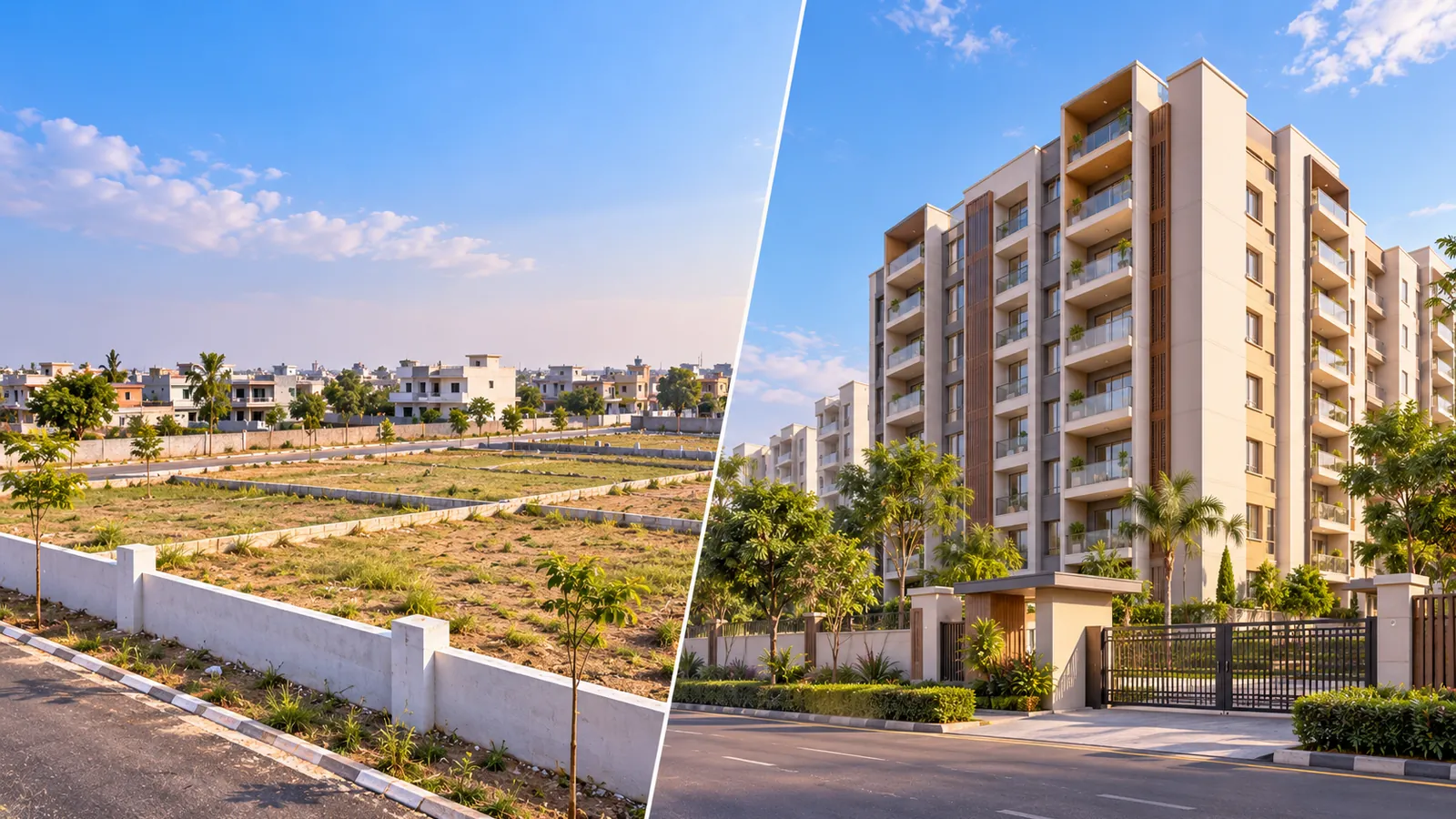
For a plot, separate the land purchase from the proposed house: record the parcel, boundaries, access, promised development and future building specification. For a flat, record the unit, carpet area, parking arrangements, common facilities and finishing included. Ask your lawyer to explain the ownership or leasehold rights in each proposed deed.
RERA’s conveyance provisions distinguish the individual apartment, plot or building from rights in common areas. Read section 17 of the Act alongside the actual documents; do not substitute a brochure description for the rights being transferred.
Also separate a ready flat from one still being built. For your comparison, list the promised possession date, payment milestones and unfinished work. Choose a common target: the accommodation your family needs, in a location you can use, by an acceptable move-in date.
Budget for stamp duty and registration separately
Use our UP stamp-duty and registration guide for background, then obtain a transaction-specific calculation. The official IGRSUP portal provides a stamp-duty and registration-fee calculator and valuation information.
This comparison does not quote a verified percentage. Ask the Sub-Registrar or your adviser to confirm the instrument, assessed value, ownership structure and any applicable concession. Keep duty, registration, legal fees and brokerage on separate lines. For both options, request a written statement of applicable taxes and other charges, including what the seller’s quotation already includes.
A plot needs a construction budget and an approval plan
Before choosing land, ask an architect to test your intended house against the parcel’s permitted use and building controls. Start with LDA’s official website, which links to land-use information and the Building Plan Approval System. Confirm the competent authority for the particular location.
A house on a plot needs its own building-map approval. Expect to supply ownership documents, drawings prepared by an architect or engineer, and declarations; check the exact list and current online route on LDA’s official website before you rely on any checklist. Do not assume a colony layout supplies approval for your individual house.
Request an itemised construction estimate covering foundations, structure, plumbing, wiring, finishes and supervision. Ask whether boundary work, connections, kitchen fittings, approvals and taxes are included. Specify materials and payment stages before comparing contractors. These are budgeting recommendations, not a claimed Lucknow construction rate.
Keep a contingency and a temporary-housing allowance. Test whether you could still finish if a quotation increased or a payment stage arrived before the next loan release. Obtain the building-plan position before committing to a design-dependent purchase.
Check RERA coverage for either project
RERA’s project definition includes development of land into plots as well as apartment development. Registration obligations and exemptions appear in sections 2(zn) and 3; the word “plot” does not itself settle coverage.
Use UP RERA’s project search and our registration-verification guide. Match the phase and promoter. If exemption is claimed, request the legal basis and supporting records. Treat registration, planning permission and your title review as separate checks.
Compare the actual loan offers
Bank of Baroda distinguishes purchase, plot and construction finance, including construction disbursement in stages, in its official loan-types guide. Ask whether your plan needs a flat-purchase loan, land loan, construction loan or combined purchase-and-build facility.
A land loan can carry a building deadline. ICICI Bank’s land-loan page states that residential construction must be completed within four years of disbursement. That is a named product condition, not a deadline for every bank or every plot owner.
Use our plot-loan guide for the document workflow. Compare written sanctions for your own contribution, interest, fees, release conditions and construction obligations. Ask each lender to model payments through possession and afterwards using the same borrowing amount and period. Avoid choosing solely from an advertised EMI.
Maintenance and society expenses belong in the comparison
RERA addresses essential-service maintenance and allottees’ payment obligations in sections 11(4)(d) and 19(6). Obtain the actual agreement and association budget instead of assuming a universal society charge.
For a flat, request recent bills, reserve contributions, major-repair proposals and a statement of arrears. For a plot or independent house, budget for upkeep, security and repairs, and ask whether estate maintenance also applies. Compare annual outgoings over the same period. Include a repair reserve even when nobody sends a monthly maintenance invoice.
Separate possession from title and completion checks
IGRSUP’s buyer precautions call for checking the seller’s rights, records and property on site. For a plot, reconcile the physical boundary and access with the documents. For a flat, inspect the actual unit and obtain the applicable completion or occupancy documents for review.
Do not use lender approval as your entire investigation. HDFC Bank’s Lucknow checklist itself distinguishes legal, technical and transaction-specific documents. Ask your lawyer to investigate title, mortgages and unresolved claims; use our EC guide for the registration-record search.
A hypothetical worked cost comparison
Every number below is invented for illustration. These are not Lucknow prices, contractor quotations, tax estimates or forecasts. Assume a family finds both finished accommodation options suitable; that assumption does not establish equal area, location or quality.
- Plot and house: land ₹25 lakh; construction ₹22 lakh; design, supervision and approvals allowance ₹2 lakh; boundary and connections ₹2 lakh; additional fit-out ₹3 lakh; contingency ₹3 lakh; temporary accommodation ₹1.8 lakh. Subtotal: ₹58.8 lakh.
- Ready flat: purchase ₹50 lakh; additional fit-out ₹3 lakh; initial maintenance or deposit allowance ₹1 lakh; contingency ₹1 lakh. Subtotal: ₹55 lakh.
The illustrative difference is ₹3.8 lakh before transaction and financing costs. If the assumed ₹22 lakh construction bill rises by 10%, add ₹2.2 lakh: the plot-and-house subtotal becomes ₹61 lakh. This is a sensitivity test, not a prediction.
To complete each budget, add separately verified stamp duty and registration, applicable taxes not already included, legal and brokerage costs, lender fees and borrowing interest. Then compare ongoing maintenance and taxes over your chosen ownership period. Avoid counting a financed purchase cost again as loan principal; show financing interest separately.
Finally, make a dated cash schedule. A total budget does not tell you whether savings will cover the next payment before a bank releases funds. Replace every illustrative allowance with evidence before using this exercise to decide.
Resale and liquidity: a judgement, not a promise
My judgement is that the better resale option depends on the next buyer’s budget, usable location, documentation and willingness to manage construction. I would not assume plots always appreciate faster or flats always sell sooner.
Ask for evidence of completed comparable transactions, distinguish asking prices from completed sales, and test how long you could carry either property without selling. Consider whether your planned house would suit another household. Treat any resale estimate as uncertain and keep it separate from the money required to complete your purchase.
Before-payment checklist
- Compare usable accommodation and realistic move-in plans.
- Obtain itemised purchase, construction and finishing budgets.
- Confirm title, access, land use and relevant approvals.
- Check the exact project’s RERA position.
- Get transaction charges and loan conditions in writing.
- Review maintenance bills, reserves and outstanding dues.
- Test higher costs, delayed possession and a slower resale.
Frequently asked questions
Is a plot always cheaper than a flat?
There is no universal answer. Compare the cost of a usable home, including construction, approvals, finance, temporary accommodation and ongoing expenses, using written estimates for the actual properties.
Which option should I choose?
My judgement: favour a ready flat if a predictable move-in plan matters most; consider a plot if control over the house design justifies managing construction. Resolve the paperwork and budget before choosing either.
Sources
Official and primary references checked on 15 October 2026:
- IGRSUP: calculator and registration services; buyer precautions.
- LDA: current services and map approval.
- UP RERA; India Code: RERA Act.
- ICICI Bank: land loan; Bank of Baroda: loan types.
- HDFC Bank: Lucknow document checklist.
Looking for a plot in Lucknow or Kanpur?
Register your interest and Plot Mitra will connect you with matching plot owners and dealers as inventory becomes available.
Register your interestRelated: Buying a Plot in Lucknow · UP Stamp Duty and Registration Charges · Plot Purchase Loans · Verify UP RERA Registration