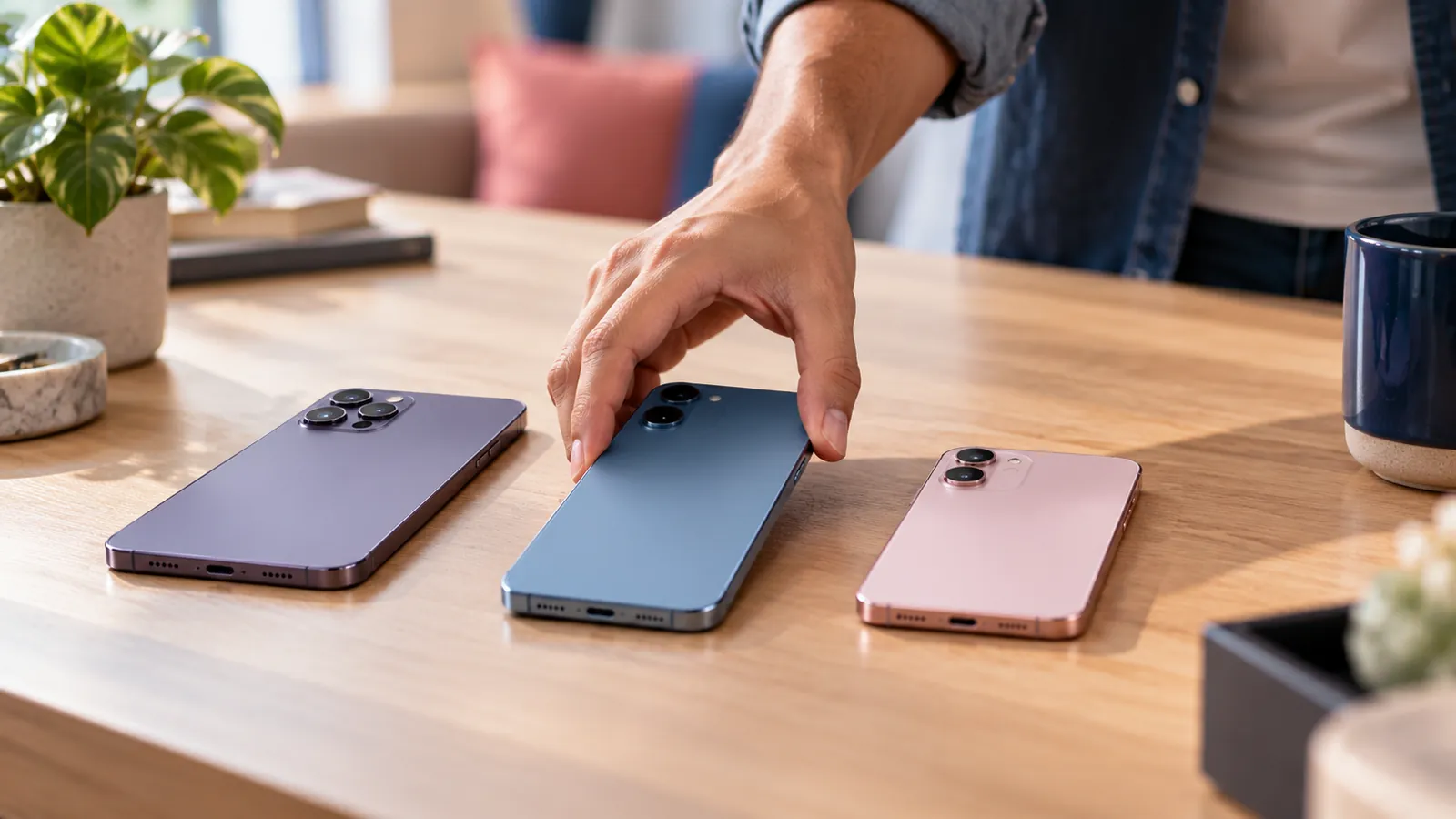
Budget phones have improved a lot, but spec sheets are full of numbers that sound impressive and matter little. This guide explains what to look at first, so you can compare phones quickly without relying on marketing names.
1. Processor and RAM: smoothness over years
The chipset decides how fast apps open and how the phone feels after two years of updates. Compare the exact processor name rather than "octa-core". For most people, a recent mid-range chip with enough RAM (6 GB or more is a comfortable target in 2026) matters more than a very high camera megapixel count. "Virtual RAM" or "RAM expansion" uses storage and is not the same as real RAM.
2. Software updates
Check how many years of Android version updates and security patches the brand promises for that specific model. A phone with longer support stays safer and keeps working with banking and payment apps for longer, which often makes it better value than a cheaper phone with a short update promise.
3. Storage
Photos, videos and messaging apps fill storage quickly. 128 GB is a practical minimum for most people; choose more if you record a lot of video and the phone has no memory card slot. Look for faster storage types in the specifications if you are choosing between two similar models.
4. Battery and charging
Battery capacity (mAh) gives a rough idea, but efficiency varies between chips and screens, so read reviews that test real screen-on time. Check whether a charger is included in the box and what charging speed it supports.
5. Display
A higher refresh rate (90 Hz or 120 Hz) makes scrolling feel smoother. Brightness matters if you use your phone outdoors. AMOLED panels usually give better contrast; good LCD panels are fine for most users. Resolution beyond Full HD makes little difference on a phone screen.
6. Cameras: judge the main camera
Extra macro and depth cameras on budget phones rarely add much. Judge the main camera using sample photos in reviews, especially low-light shots, rather than megapixel numbers.
7. Network, warranty and service
Check that the phone supports the 4G and 5G bands used by your carrier in your country, especially if you buy an imported model. Find out where the nearest authorised service centre is and how long the warranty lasts.
Quick comparison checklist
- Exact chipset and real RAM
- Years of updates promised for this model
- Storage size, and whether there is a card slot
- Tested battery life in reviews
- Display refresh rate and brightness
- Main camera samples, especially at night
- Network bands for your carrier and local service support
When we list phones on our Deals page, check the exact variant (RAM and storage) on the store page before you buy, and read our guide on spotting fake discounts.